Forensic science in criminal proceedings
Forensic science often plays a central role in criminal trials: it provides the technical evidence without which significant proceedings and "real crime cases" involving murder, manslaughter, robbery, or jewel theft are virtually impossible today. Advances in technology have significantly advanced evidence gathering in recent years, offering ever more possibilities for analyzing traces. Good criminal defense lawyers must possess a thorough understanding of the technical details and how to handle such findings in court. Furthermore, the complexity of procedural rules provides avenues for an effective and successful defense.
What is forensic science?
Forensic science is an important subfield of criminalistics that uses scientific and technical methods to help solve crimes. It encompasses the search for, securing, and evaluating evidence by trained forensic technicians. This serves the purpose of preparing objective evidence in a way that is admissible in court, so that perpetrators can be identified and the sequence of events can be reconstructed. The fields range from biology, physics, and chemistry to modern technology: important areas include DNA analysis, digital forensics, fingerprinting, ballistics, and toxicology. The state criminal investigation offices (LKA) and the Federal Criminal Police Office (BKA), as well as specialized police departments and forensic institutes, are primarily responsible for practicing these forensic techniques.
role in the criminal trial
Forensic evidence is of considerable importance in criminal proceedings because it is considered objective and scientifically sound. It therefore carries particular weight in the court's assessment of whether it is convinced of a defendant's guilt. Especially compared to witness testimony, which is considered the least reliable form of evidence, forensic evidence is often more reliable. At the same time, this evidence is not infallible: common sources of error include improper securing of evidence, faulty analysis, or misinterpretation of the results. For this very reason, a thorough examination of the acquisition and use of evidence is essential for a competent criminal defense.
Furthermore, forensic methods, especially those affecting physical integrity, are subject to strict legal regulations and generally require a judicial warrant. Lawful evidence gathering is also necessary to make evidence admissible in criminal proceedings; otherwise, the defense, in particular, can invoke prohibitions on the use of evidence.
Relevant areas of forensic science
DNA analysis
DNA analysis is one of the most common and precise methods in forensic science. This procedure can determine whether a trace found in a case originates from a potential victim or whether it can be attributed to a perpetrator. Almost any trace of biological material—such as blood, hair, skin cells, saliva, or semen—is sufficient for DNA analysis. A comparison requires both the trace to be examined and a DNA sample with which to compare it. Often, suspects or accused individuals are summoned for DNA sampling in accordance with Section 81a Paragraph 1 of the Code of Criminal Procedure (StPO). In cases involving perpetrators of sexual offenses or serious crimes, corresponding DNA material may also be stored in a database for the purpose of investigating future offenses, pursuant to Section 81g of the StPO.
For the defense, it is important to understand that the mere existence of a DNA trace says nothing about how or when it originated. A positive DNA match can, for example, occur even without direct contact with the crime or the person – this is called secondary transfer.
Federal Court of Justice (BGH), Judgment of 16.08.2023 (5 StR 434/22) – Mixed DNA traces and secondary transfer:
In a judgment dated August 16, 2023, the Federal Court of Justice (BGH) made findings regarding mixed DNA traces and secondary transfers. The BGH overturned the judgment of the Hamburg Regional Court because the evaluation of evidence concerning the acquittal of the defendant on the charge of aiding and abetting drug trafficking was legally flawed. The defendant had previously been convicted by the Hamburg Regional Court of breaching official secrecy in three cases but acquitted of the charge of aiding and abetting drug trafficking. The subsequent appeal by the Public Prosecutor General led to the reversal of the judgment because the Regional Court's evaluation of evidence, particularly regarding the DNA traces and the defendant's statements, was legally flawed. The court determined that the results of molecular genetic comparative analyses must be presented in such a way that they are comprehensible to the appellate court. Furthermore, if a judge does not rule out the possibility of a DNA trace being transferred by a person other than the perpetrator, he must make findings as to how this could have been possible and whose traces are also detectable.
Digital forensics
With ever-advancing digitalization, digital forensics has become an important tool in modern investigations. It enables the evaluation of electronic data carriers – including the analysis of mobile phones, computers, and cloud data. The goal is to secure digital evidence in such a way that it is admissible in court due to its authenticity. In criminal proceedings, chat histories, search histories, recordings, and location data are particularly relevant. While such data can provide exculpatory information, it is also frequently a key piece of incriminating evidence. For the defense, the admissibility of this evidence can be a strategic point of leverage: To be admissible in court, digital evidence must also comply with evidentiary and data protection regulations. The acquisition of the data, in particular, can be a crucial hurdle.
Dactyloscopy (fingerprints)
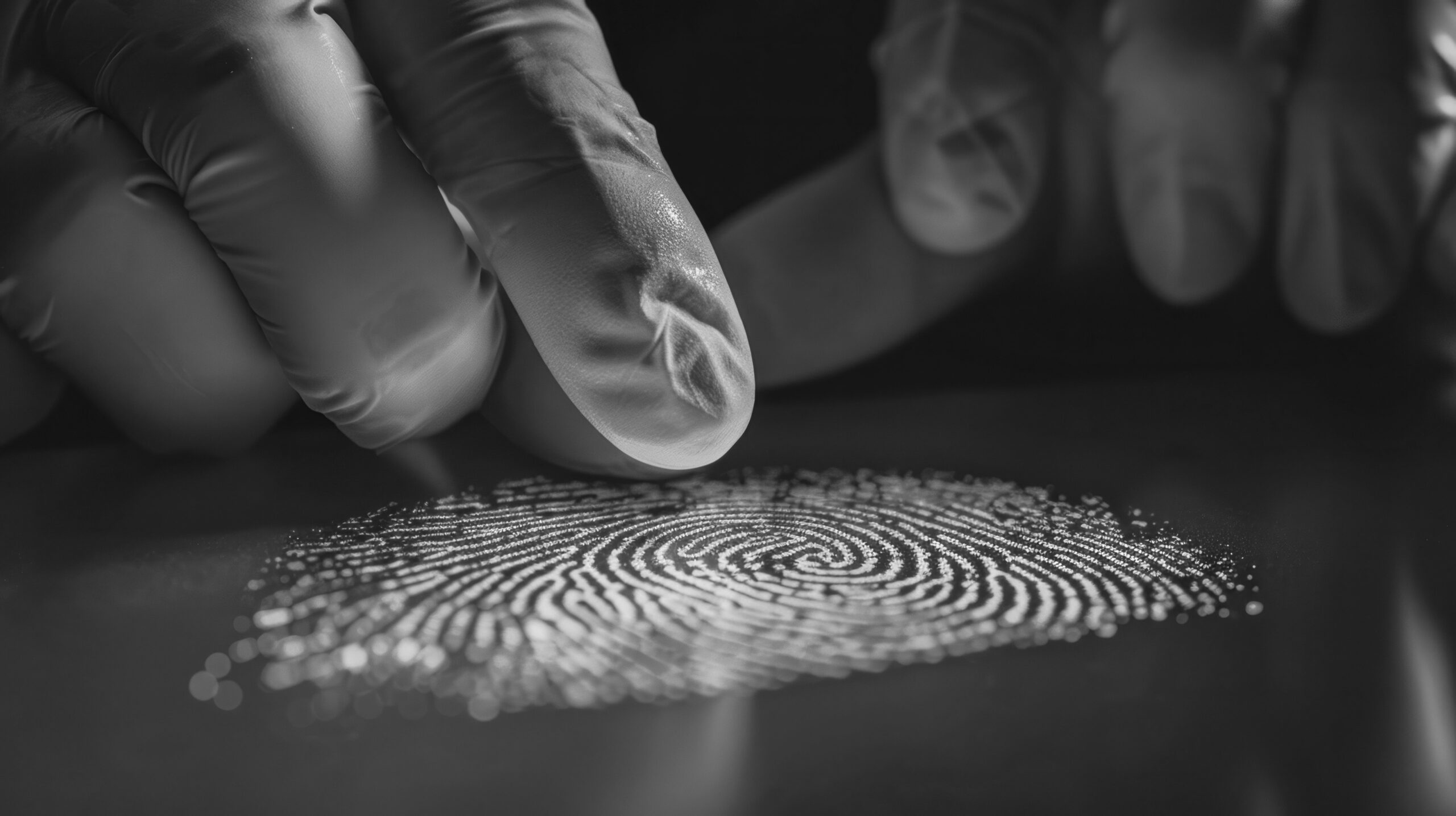
One of the most classic and oldest forms of evidence is fingerprints. Dactyloscopy describes the systematic examination of fingerprint patterns, allowing individuals to be identified by their fingerprints. Because fingerprints are unique and unchanging, they are considered a very reliable form of evidence. According to Section 81b Paragraph 1 of the German Code of Criminal Procedure (StPO), fingerprints may be taken during investigations, even against the will of the accused, if this is necessary for the purposes of the criminal proceedings. However, this form of evidence is also susceptible to errors: poor print quality, incorrect interpretation, and the presence of only partial prints can all distort the results or the identification of individuals.
Ballistics & Weapon Technology
When firearms were used in a crime, ballistics is of central importance. Ballistics is the study of the motion and effects of projectiles. By examining projectiles, casings, and bullet holes, conclusions can be drawn about the weapons used and the sequence of events – for example, how many weapons were used or from what distance the shots were fired. Gunshot residue, i.e., the particles released when a firearm is discharged, also plays a role in identifying the person who fired the shot. However, the quality of the evidence and its significance for the crime depend heavily on the specific circumstances of each case.
toxicology
Toxicology deals with the analysis of foreign substances in the body and their main breakdown products in bodily fluids and tissues. The findings are then evaluated with regard to legal issues. Biological materials such as blood, urine, and hair are primarily examined. The foreign substances detected are usually alcohol or narcotics, as well as medications or toxins. This is particularly relevant, for example, in cases of traffic offenses or when a victim is intoxicated. Furthermore, the topic can be relevant when determining the criminal responsibility of an accused person. However, a single measurement does not provide absolute truth: When interpreting toxicological findings, individual factors—such as metabolism, sex, weight, age, health status, and tolerance—must always be considered. Moreover, not every detected substance automatically leads to criminal liability.
Forensic phonetics and document examination
Forensic science encompasses many other subfields, including forensic phonetics and forensic document examination. Phonetics is the scientific study of speech sounds, which allows for the analysis of audio recordings. This involves comparing voice characteristics, analyzing speech patterns, and identifying speakers. Furthermore, audio recordings can be verified for authenticity.
The examination of documents and manuscripts involves analyzing handwriting characteristics, printing techniques, paper, and ink, allowing documents to be authenticated and scribes to be identified. This analysis can then be used to determine whether documents have been forged or altered.
Use in criminal proceedings
The results of forensic investigations are usually presented in criminal proceedings by expert witnesses who prepare reports on their analyses and explain their findings in court. The court is not obligated to accept these presentations without reservation, as evidence must never be considered in isolation. Rather, a comprehensive evaluation of all evidence and circumstances is required.
Sources of error in forensic science
Forensic science is a fundamental and indispensable part of modern investigations. Despite its effectiveness, it also contains several potential sources of error that must be avoided or uncovered.
- During the evidence collection phase, there is a possibility that traces could be contaminated, mixed, or lost. This can have serious consequences: perpetrators could go unpunished or be wrongly accused again.
- Regarding the transport and storage of traces, results can be distorted by improper storage, e.g., incorrect temperature, unsuitable packaging, or cross-contamination with other traces.
- Furthermore, technical errors or faulty laboratory processes in the analysis of any traces are conceivable.
- A particularly vulnerable source of error lies in the interpretation, that is, the subjective assessment of the findings by experts. Here, the phenomenon of confirmation bias arises. This occurs when investigators or experts – both consciously and unconsciously – tend to interpret results in a way that confirms existing suspicions. It is crucial, therefore, that investigations are always conducted in a methodologically neutral and open-ended manner.
Criminal defense
Effective criminal defense requires a critical examination of forensic evidence. This means that expert opinions should be carefully reviewed and critically questioned. In some cases, it may be advisable to consult alternative experts. In any such complex case, it is essential to rely on a criminal defense attorney with extensive forensic experience.
FAQ
What is forensic science explained simply?
Criminal science encompasses all scientific methods for solving crimes, including DNA analysis, fingerprint examinations, and digital forensics.
How does DNA analysis work in criminal proceedings?
DNA analysis examines genetic material from traces such as skin cells, blood, or hair. An individual DNA profile is created and compared with reference samples. This allows researchers to determine whether a person is linked to a particular trace.
How reliable is DNA evidence in court?
DNA evidence is considered extremely reliable, but it is not infallible. Sources of error are conceivable during evidence collection, analysis, or interpretation. In particular, secondary transmission should always be considered.
What is secondary DNA transfer?
Secondary DNA transfer refers to the transmission of DNA via a third person or any object. This means that a person's DNA can be found even if that person was never present at the crime scene.
Can someone be wrongly convicted based on DNA evidence?
Yes, in theory, this is possible due to errors in evidence collection, contamination, or misinterpretation. Evidence should therefore be critically examined and always considered in the context of all circumstances of the individual case.
What do fingerprints really prove?
Fingerprints can prove that a person has come into contact with an object or place. However, they cannot determine when the contact occurred or whether it is actually related to a crime.
What evidence is admissible in criminal proceedings?
All evidence obtained lawfully is generally admissible in criminal proceedings. This includes, in particular, witness statements, forensic evidence, and expert opinions. Evidence may be inadmissible if it was obtained unlawfully.
How is forensic evidence collected at a crime scene?
Evidence collection is carried out by specialized professionals. Traces at the crime scene are documented, secured, and later analyzed in a laboratory.
What role do expert witnesses play in criminal proceedings?
Experts can be commissioned in criminal proceedings to prepare reports on technical or scientific issues. This helps the court understand complex evidence. However, the court is not obligated to follow the expert opinion without reservation.
How reliable is forensic evidence?
Forensic evidence is generally very reliable and conclusive, but not infallible. Its reliability always depends on the quality of the traces, the analysis, and the interpretation.